What is Posttraumatic Stress disorder?
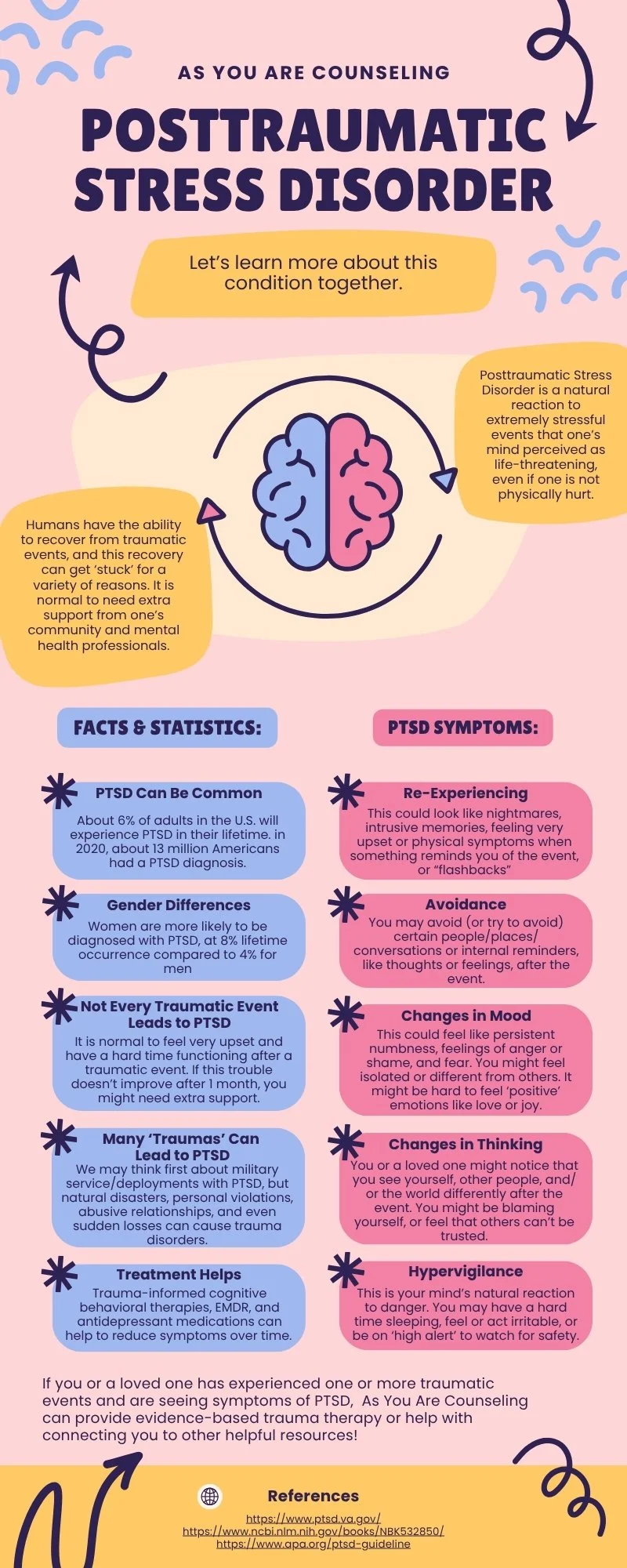
After a traumatic event - such as abuse or assault, military deployment, gun violence, or even the sudden death of a loved one - it is normal to feel extreme distress and have a hard time returning to ‘normal’ life. You may notice difficulty sleeping, nightmares, uncontrolled thoughts or memories about the event, uncontrolled ‘images’ or sensory memories of the event in your mind, irritability, and feelings of fear or intense sadness, among other reactions. For some people, these reactions get better on their own with time and support. If you notice that these reactions are not improving after a month, if you’re feeling unable to do your ‘normal’ activities after a month, or if you’re worried about how intense these reactions are, it is a great idea to talk to someone.
Seeking help is a brave decision. Treatment can be a shorter-term or longer-term process depending on your experiences, and even with good quality treatment, you may feel worse before it gets better. This is because processing traumatic events and reactions can bring up the discomfort that you have been avoiding. A professional who is well-trained in trauma-informed therapies can help you prepare for trauma work and can guide you through the discomfort with safety and compassion.
If you would like counseling support, please feel free to reach out to Aimee at As You Are Counseling for a free consultation or to start therapy services. You may also reach out to your primary care physician or psychiatrist if you have a trusted connection. Additionally, there are helplines available for immediate support:
NAMI Helpline: call 800-950-6264, or text 'NAMI' to 62640, or email helpline@nami.org
Helpline Availability: Monday - Friday, 10am - 10pm
Wounded Warrior Project for veterans: call 888-997-2586, or email resourcecenter@woundedwarriorproject.org,
Hours of Operations: Monday - Friday, 9 am - 9 pm EST
Chat Availability: Monday - Friday, 9 am - 7 pm EST